In a world that constantly celebrates success in its many forms—be it financial wealth, personal achievement, or public recognition—it’s easy to get swept up in the narrative that success is the ultimate goal. But when we peel back the layers of what success truly means, we often find a superficial, culturally constructed ideal that fails to capture the complexity of human experience. What if success, as we commonly define it, is a myth? And, more importantly, what if the true measure of a meaningful life lies in the impact we have on others and the world around us?
The Myth of Success
The concept of success has become almost synonymous with societal validation. The idea that you need to “make it”—to reach a certain level of fame, wealth, or status—has been ingrained in us through centuries of cultural narratives, from fairy tales to modern entrepreneurship stories. The media, the corporate world, and social platforms often push this idea forward, creating an ever-present benchmark that seems to define personal worth.
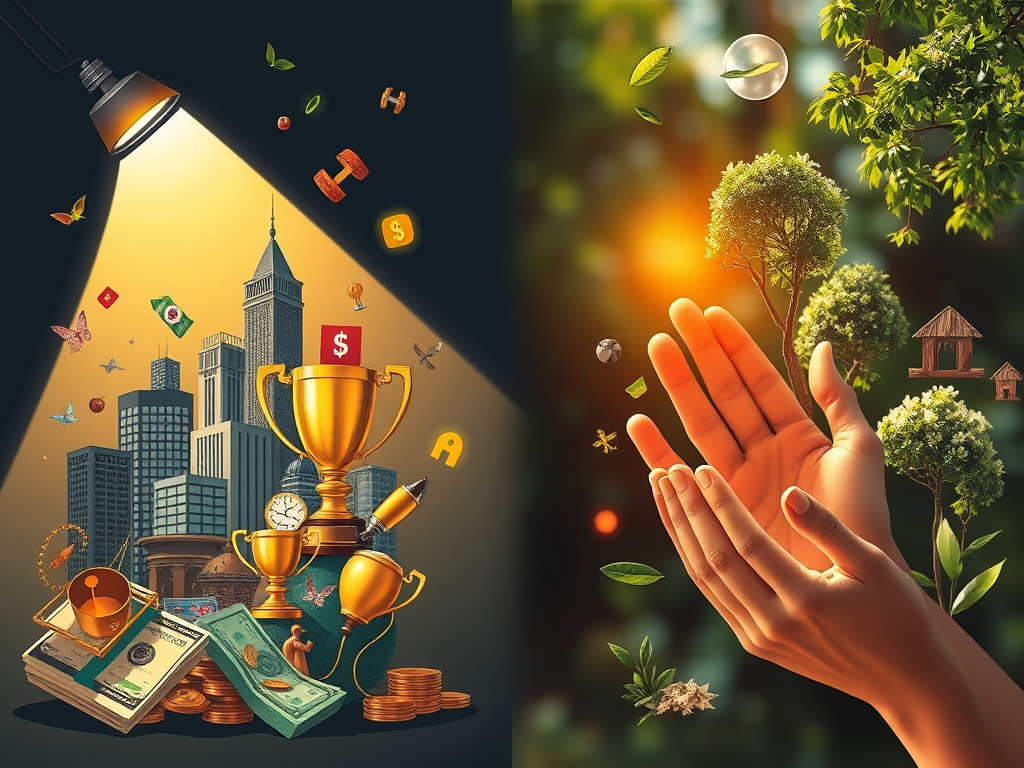
But the problem with this myth is that success is an elusive and subjective concept. What one person defines as success could be entirely different from someone else’s perception. Some measure it by the number of zeros in their bank account; others see it in the title of their job, their follower count, or the number of awards on their shelf. These benchmarks can vary drastically, leaving us chasing an ever-moving target, which often leads to feelings of inadequacy, dissatisfaction, or a sense of being lost.
Furthermore, success, as we’ve been taught to understand it, is often framed in terms of the individual. It focuses on personal achievement, which can create a culture of comparison, competition, and isolation. “Success” can make us feel as though we are either winning or losing, putting us into a perpetual cycle of striving for something that might not bring the fulfillment we hope for.
Why Impact Matters More Than Success
If success is a fleeting and often empty pursuit, what then is the real measure of a life well-lived? The answer lies in impact. Unlike success, impact is about the effect we have on the world and the people around us. It’s not about accumulation or personal gain; it’s about the legacy we create through our actions, our relationships, and our contributions.
Impact is something more tangible, more meaningful, and more enduring than the external markers of success. It’s about how we touch the lives of others, how we influence the communities we’re a part of, and how we contribute to the greater good. While success often focuses on “what I can get,” impact is about “what I can give.” It’s not about the recognition we receive but about the positive change we can create.
Think of the countless people throughout history who may not have been celebrated in their time as “successful,” but whose work has had an indelible impact on the world. People like Mahatma Gandhi, who fought for freedom without seeking personal fame; or Malala Yousafzai, whose courage in the face of violence has sparked a global conversation about girls’ education. These individuals may not have been focused on “success” in the conventional sense, but their impact is undeniable.
Similarly, many everyday heroes—teachers, nurses, social workers, community leaders—might never win awards or make headlines, but their contributions are felt deeply by the lives they touch. Impact is not defined by the size of your audience or the scale of your efforts. It’s about creating ripples that affect others, big or small.
Living for Impact
One of the key reasons why impact is more valuable than success is that it fosters connection. Success is often a solitary pursuit. In the race to reach the top, many people find themselves disconnected from their values, their community, and sometimes even from their own sense of purpose. The relentless pursuit of success can create isolation, as it demands everything from the individual, sometimes at the expense of relationships and well-being.
Impact, on the other hand, is inherently relational. It is about creating a bond with others and contributing to something larger than oneself. When we focus on impact, we begin to think less about personal gain and more about the collective good. It shifts the focus from the ego to the environment, from individual achievement to communal growth.
Living for impact means aligning our actions with our values and focusing on what truly matters—leaving a legacy that transcends material wealth or public recognition. This might mean being a mentor to a young person, volunteering to help those less fortunate, working toward social justice, or simply being a kind and compassionate presence in your everyday interactions. These are the things that, over time, build lasting influence and create a deep sense of fulfillment.
Conclusion
Success may be the myth that we’ve been conditioned to chase, but impact is the reality we should aspire to. Rather than measuring our worth by the external markers of success, we should focus on the real, lasting difference we make in the lives of others. In the end, it is not the titles, wealth, or awards that matter most, but the positive change we create in the world, no matter how small or large. True fulfillment lies not in what we achieve for ourselves, but in the impact we have on the lives of others. In this way, impact is not just real—it is everything.
Yours in essence, Minal Dalal
Author, Life navigator, Founder of Adhyaant, Co-founder of Amysh & Co
 Adhyaant - The Living Ecosystem For Human Potential
Leave a comment